Luxury hotels are designed to impress on opening day.
The real test comes a year or two later.
In hospitality litigation, some of the most expensive failures are not always structural. Often, they involve furnishings, finishes, materials, layouts, and operational decisions that looked beautiful in renderings, but never fully held up under real-world hotel use.
These types of hospitality failures are increasingly becoming the subject of construction defect, hospitality, and expert witness litigation involving luxury hotels, resorts, restaurants, and mixed-use developments.
Many of these disputes involve FF&E (furniture, fixtures, and equipment), finish selections, specification decisions, and operational design choices that fail prematurely under heavy hospitality use.
I regularly see issues involving:
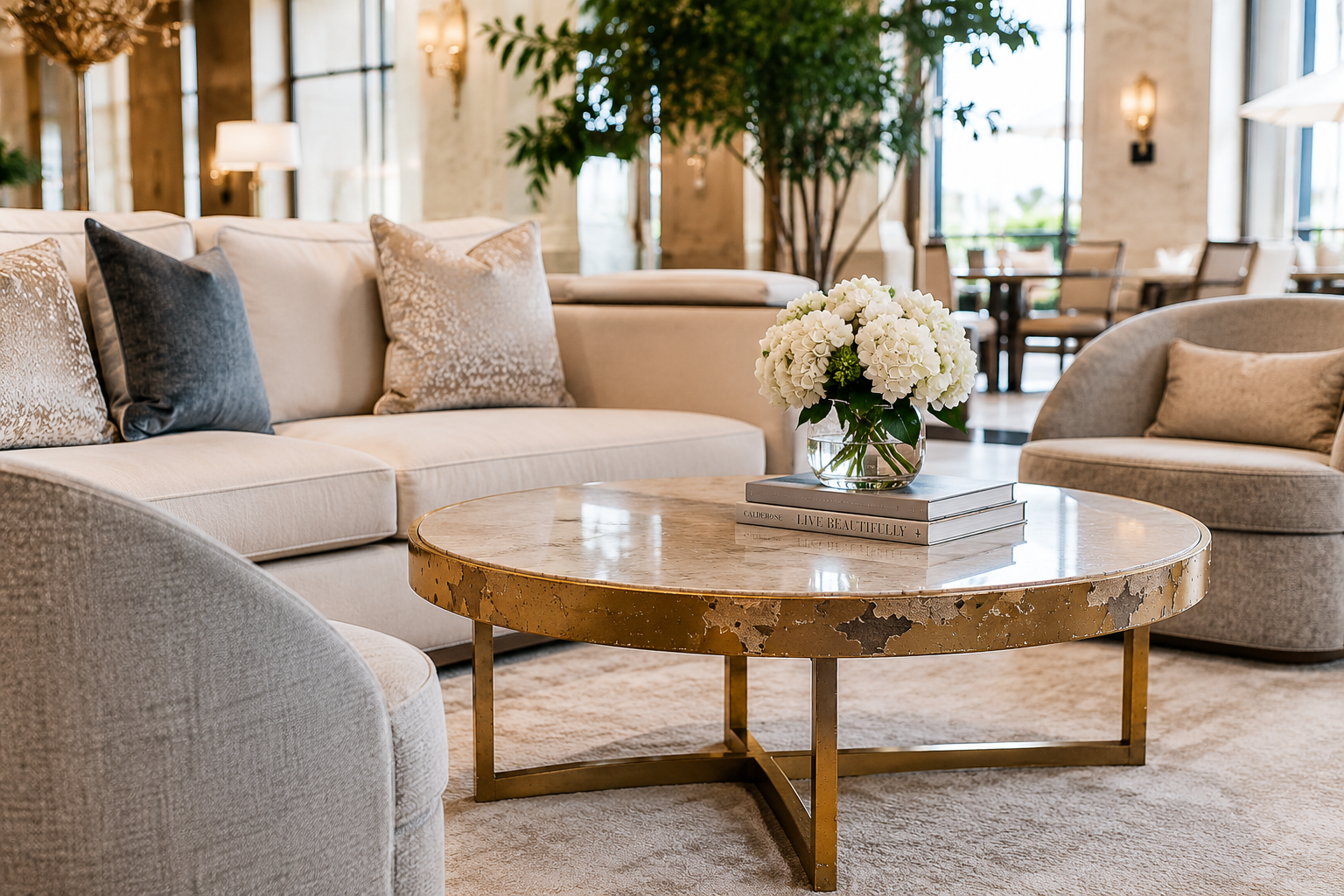
tarnishing metals
chipping lacquer finishes
difficult-to-clean upholstery
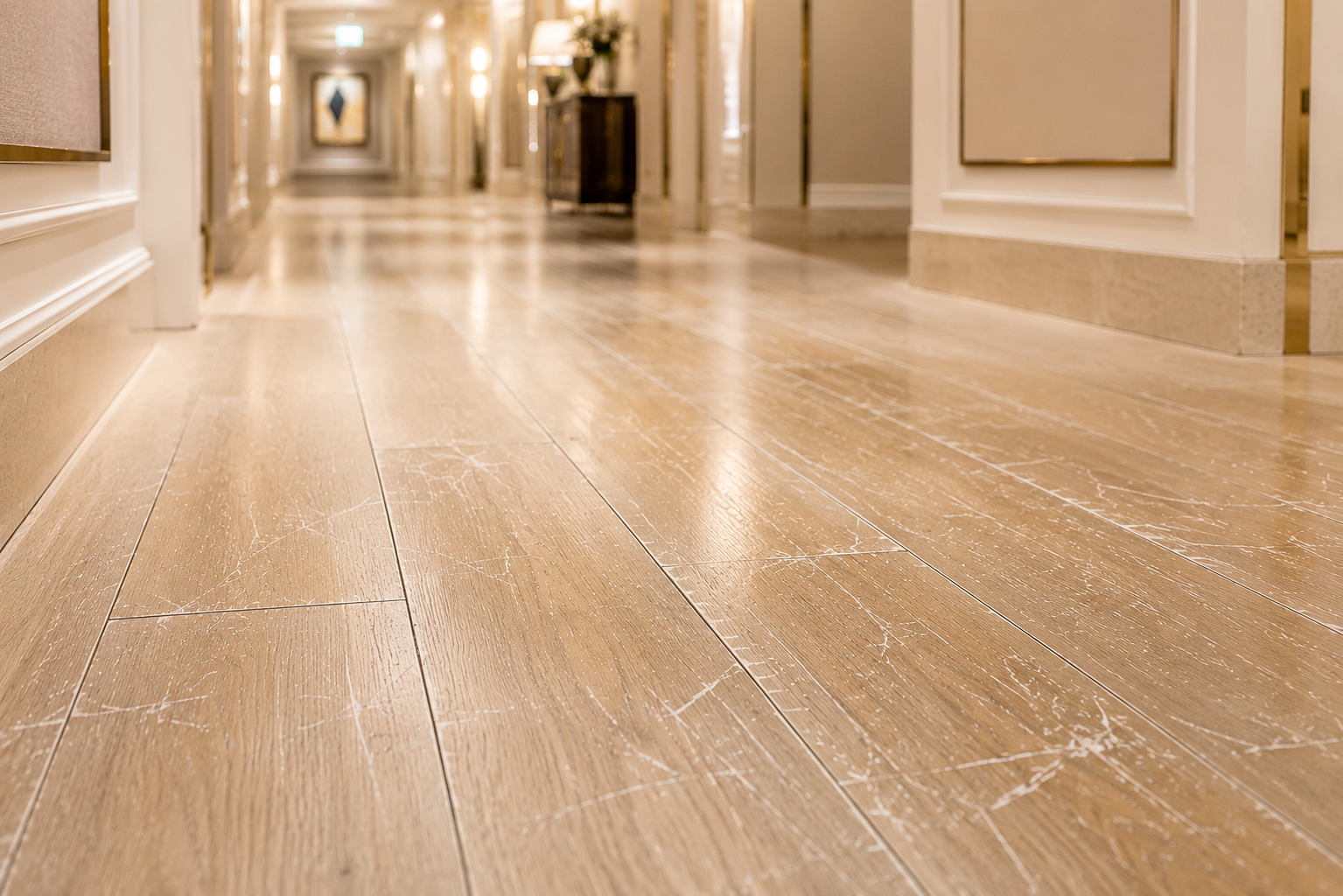
delicate materials in high-traffic environments
oversized furniture that disrupts circulation and service flow
poorly performing textiles and wallcoverings
residential-grade materials used in commercial hospitality settings
Luxury hospitality environments operate very differently than luxury homes. A resort lobby, restaurant, guest suite, or amenity space may experience thousands of guests, luggage impacts, food and beverage exposure, cleaning chemicals, UV exposure, and continuous operational wear — all while still being expected to maintain a flawless appearance.
That creates a very different standard for design, material selection, and long-term performance.
Why Luxury Hotel and Resort Spaces Fail So Quickly
In many hospitality disputes, the issue is not one catastrophic defect, but a collection of design, specification, operational, and coordination decisions that slowly begin failing under real-world use.
Some materials simply are not appropriate for heavy hospitality environments, no matter how visually striking they may appear.
Beautiful polished metals may oxidize almost immediately under guest contact. Delicate textiles can stain or wear prematurely. Complex furniture designs may become difficult for housekeeping and maintenance teams to manage efficiently. Oversized furnishings can interfere with circulation, service operations, accessibility, and even safety.
In luxury environments, owners and operators are not simply paying for aesthetics — they are paying for long-term performance, durability, guest experience, and operational efficiency.
When those factors are not fully considered during design and specification, the financial consequences can become substantial very quickly.
When Maintainability Becomes a Litigation Issue
Luxury hospitality owners invest enormous amounts of money into creating elevated guest experiences. When materials and furnishings begin deteriorating prematurely, the consequences can extend far beyond aesthetics.
These disputes may involve:
accelerated replacement costs
operational disruption
maintenance burdens
storage expenses
guest complaints
brand impact
reduced usability of spaces
safety concerns
warranty and product defect claims
In high-end hospitality environments, even relatively small design and material failures can quickly become very large financial issues.
The Role of an Expert Witness in Hospitality Design Cases
Hospitality-related litigation often requires analysis that goes far beyond basic design opinions.
These cases may involve evaluating:
material suitability
durability expectations
specification decisions
standard of care
maintenance foreseeability
operational functionality
construction coordination
installation quality
circulation and human factors
code and safety considerations
As an actively practicing luxury designer and construction professional involved in hospitality, residential, and commercial environments, I frequently evaluate how materials, layouts, finishes, and construction decisions actually perform over time — not just how they appeared during design presentations.
These issues often overlap with broader construction defect, waterproofing, premises liability, and luxury residential litigation matters as well.
In luxury hospitality, beautiful design is only part of the equation. Long-term performance matters too.
For attorneys, ownership groups, developers, hospitality operators, and insurers involved in hospitality-related disputes, understanding that distinction can become central to the case.
Luxury hospitality disputes often require evaluation of not only aesthetics, but also durability, maintainability, operational functionality, material performance, and standard of care. Lori Dennis provides expert witness consulting, site inspections, expert reports, deposition testimony, and litigation support in hospitality, luxury residential, commercial, and built-environment matters nationwide.
Celebrity interior designer and expert witness Lori Dennis, ASID, LEED AP, NCIDQ leads one of the top award-winning interior design firms in Los Angeles. A sought-after speaker, brand ambassador, and trusted authority in luxury design, Lori brings decades of expertise to high-profile projects, industry partnerships, and legal consulting nationwide.