
When the Dream Home Becomes Exhibit A
Luxury homes are supposed to feel effortless. The stone is perfect, the lighting is flattering, the millwork is seamless, and the client is ideally not Googling “construction litigation attorney” at midnight.
But in high-end residential construction, things can go sideways fast. And when they do, the dispute is rarely about one cracked tile or one delayed sofa. It is usually a layered mess of design decisions, construction coordination, procurement, billing, scheduling, substitutions, owner expectations, and professional responsibility.
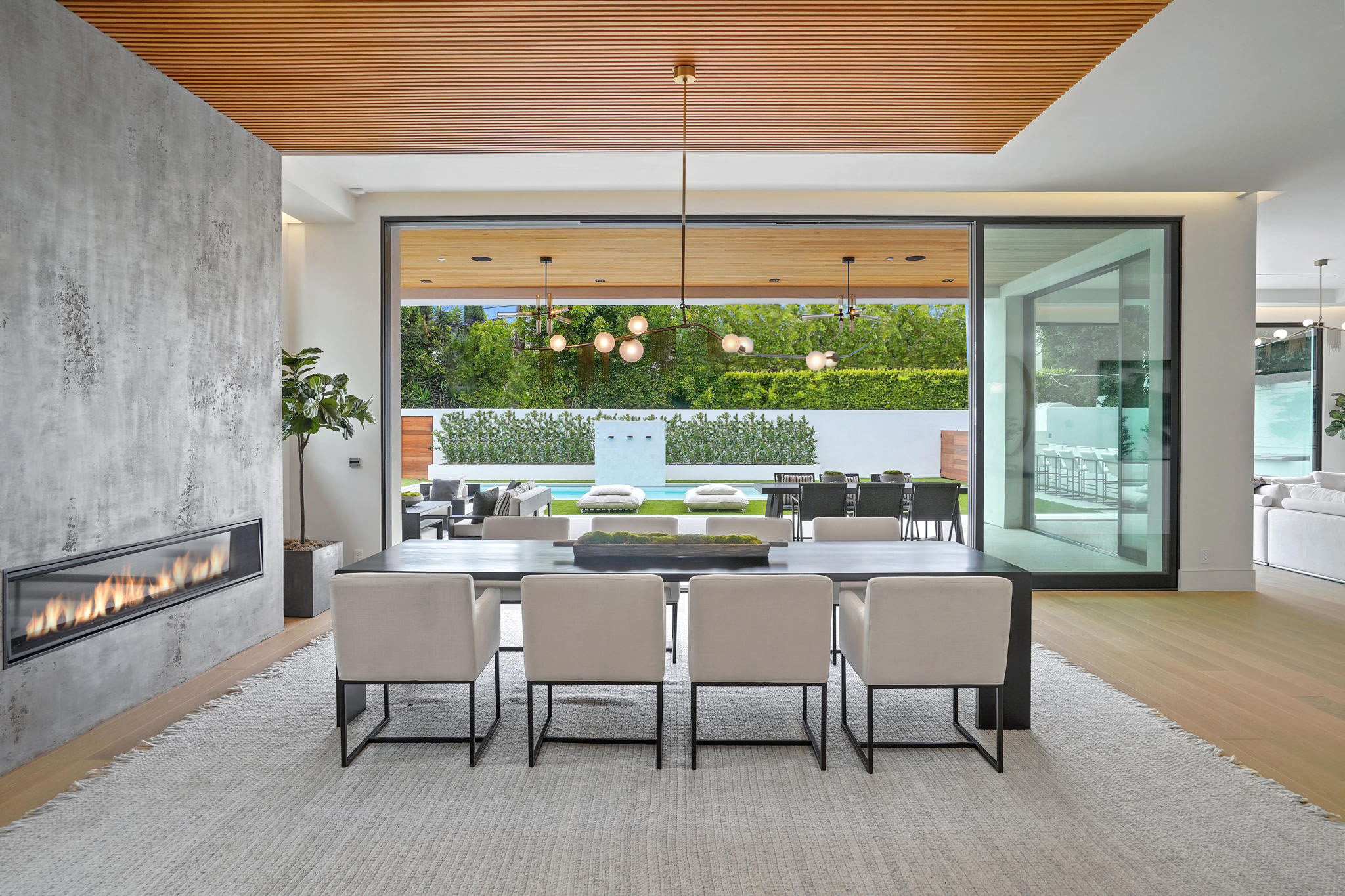
A modern Beverly Hills dining room by Lori Dennis opens seamlessly to the backyard, blending indoor-outdoor California living with refined luxury design.
In other words: welcome to the glamorous side of litigation.
Luxury Residential Disputes Are Different
A $40 million custom residence is not just a bigger version of a kitchen remodel. It is a small ecosystem.
There may be an architect, interior designer, general contractor, owner’s representative, procurement team, lighting designer, landscape architect, engineers, specialty artisans, millworkers, stone fabricators, glass installers, AV consultants, and a parade of subcontractors who all swear the problem started with someone else.
That is why luxury residential litigation often requires more than a traditional construction defect analysis. Attorneys need someone who understands how a high-end home is actually designed, specified, purchased, coordinated, installed, and judged.
Because in luxury work, “technically installed” is not the same as acceptable.
The Big Issues I See in High-End Home Disputes
In luxury residential litigation, the problems often fall into a few familiar categories.
1. The Plans Were Beautiful, But Not Buildable
A rendering can sell a dream. A buildable plan has to survive the job site.
When drawings are incomplete, poorly coordinated, missing key engineering details, or disconnected from interior realities, delays and change orders are almost guaranteed. The exterior may look impressive, but if the interior layouts, structural requirements, lighting, millwork, mechanical systems, and finish details do not line up, the home can become a very expensive puzzle with missing pieces.
2. Scope Creep Wearing Designer Shoes
Luxury projects often start with one budget and slowly grow a second home inside the first one.
A few upgrades become a new elevation. A new elevation becomes a new structural condition. A new structural condition becomes new engineering, new materials, new labor, new delays, and new invoices. Suddenly, everyone is using phrases like “design evolution,” while the owner is wondering why the house got larger, heavier, slower, and wildly more expensive.
An expert witness can help separate legitimate scope changes from unauthorized expansion, poor communication, or design decisions that should have been clearly disclosed and approved.
3. Finishes That Don’t Meet the Luxury Standard
In high-end homes, finish quality matters. That does not mean perfection in the abstract. It means workmanship, materials, tolerances, alignment, durability, and installation quality consistent with the project level, contract documents, approved samples, and industry standards.
Misaligned cabinetry, inconsistent stone, poorly integrated glass, visible drywall flaws, unreliable lighting systems, mismatched finishes, improper substitutions, and premature deterioration are not “just aesthetic” when the entire project was sold as luxury.
The higher the promise, the more important the proof.
4. Procurement Problems and Mystery Markups
Luxury residential projects can involve millions of dollars in furnishings, fixtures, finishes, stone, lighting, hardware, cabinetry, appliances, and custom pieces. That creates plenty of opportunity for confusion — and occasionally, creative accounting.
Common disputes include undisclosed markups, duplicate billing, inflated vendor charges, inappropriate substitutions, improper pass-through fees, furnishings that do not meet specifications, and materials selected for availability rather than suitability.
A design expert witness can evaluate whether selections were appropriate for the intended use, whether pricing and procurement practices were consistent with professional expectations, and whether the installed result matched the design intent.
5. Too Many Captains, Not Enough Control
Large residential projects can suffer when roles blur. Is the designer acting as designer, owner’s representative, procurement agent, construction manager, or all of the above? Is the contractor managing the trades or simply processing invoices? Who approved the change? Who reviewed the shop drawings? Who was responsible for catching the mismatch before the wall was closed?
When responsibility is foggy, litigation becomes foggier.
A good expert helps attorneys organize the chaos: who owed what duty, who controlled which decision, what should have been documented, and whether the work met the applicable standard of care.
Why Attorneys Need a Luxury Interior Design Expert Witness
Luxury residential disputes require someone who understands both the pretty and the practical.
As a luxury interior designer, construction professional, and expert witness, I evaluate the parts of a case that often fall between disciplines: design intent, interior architecture, finish quality, procurement, custom furnishings, coordination, project documentation, and how a high-end residence should perform in the real world.
I am not looking at a home like a casual visitor. I am looking at what was promised, what was specified, what was installed, what failed, what was reasonable, and what a competent design-build team should have done differently.
That distinction matters.
Because in a luxury home, the issue is not simply whether something exists. It is whether it was properly designed, coordinated, disclosed, installed, finished, and delivered at the level the client paid for.
The Bottom Line
When a luxury residential project goes wrong, the evidence is often hiding in plain sight: in the drawings, finish schedules, invoices, substitutions, meeting notes, change orders, emails, procurement records, punch lists, and the physical condition of the home itself.
The home may still photograph beautifully.
But litigation is not about the listing photo. It is about the truth behind the walls, under the finishes, inside the contracts, and across the professional decisions that brought the project to that point.
Need a Luxury Residential Design Expert Witness?
Lori Dennis provides expert witness services for attorneys handling luxury residential construction, interior design, finish, procurement, and standard-of-care disputes. With decades of experience in high-end design, construction, and project evaluation, Lori brings practical, real-world insight to complex cases involving custom homes, design-build teams, contractors, designers, owners’ representatives, and specialty trades.
For expert witness inquiries, contact Lori Dennis to discuss your case.