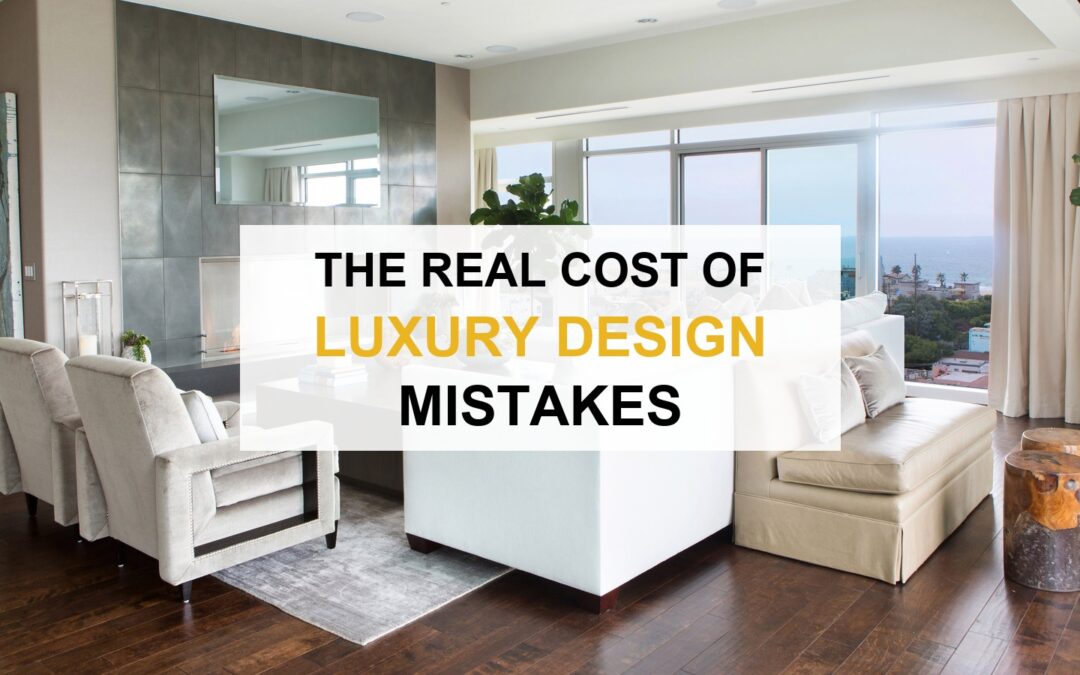
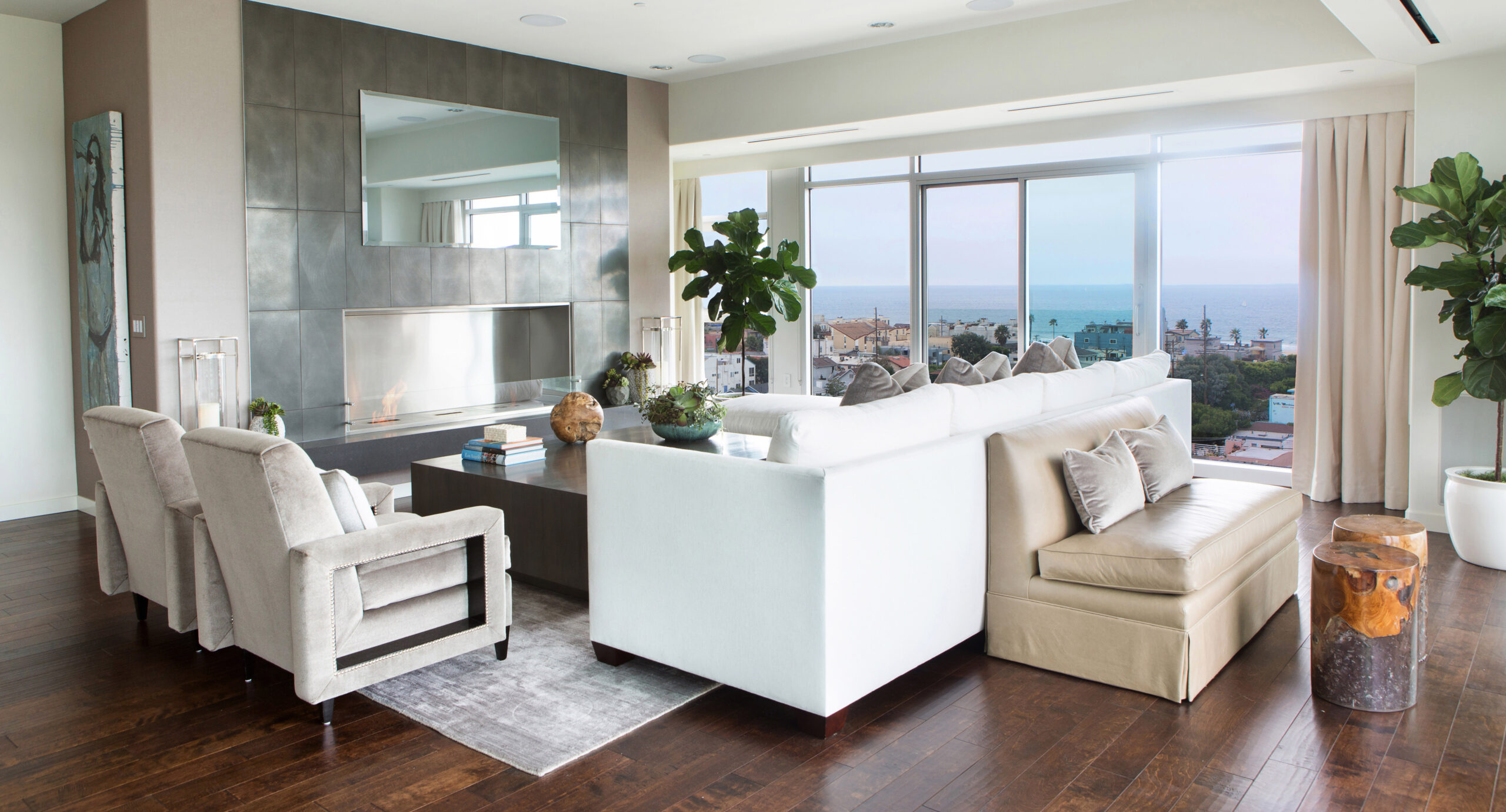
Luxury interiors are designed to look effortless. The stone is luminous, the millwork lines up, the lighting flatters, and the custom furnishings appear to have simply floated into the room on a very well-appointed cloud.
A luxury ocean-view living room by Lori Dennis.
Then the dispute starts.
In a luxury residential or hospitality case, the room can still photograph beautifully while the real problems sit just beneath the surface: the wrong material, a costly substitution, a finish that fails under actual use, a procurement bill that does not match the promise, or design work that has to be removed and done again.
That is where an interior design damages expert witness becomes useful. The question is not just, “What went wrong?” It is also, “What was the work worth, what is the damage, and what will it cost to make it right?”
A Beautiful Room Can Still Be a Bad Outcome
Luxury projects are full of details that look simple only after someone has spent an extraordinary amount of time making them look simple. A custom wallcovering, hand-finished plaster, sculptural lighting fixture, imported stone, built-in banquette, or perfectly tailored drapery may involve a long chain of decisions, approvals, specifications, vendors, trades, and invoices.
When that chain breaks, the result may not look like a dramatic construction failure. Sometimes it looks like a room that is almost right. In litigation, “almost right” can be very expensive.
A luxury interior design damages claim may involve finishes that deteriorate prematurely, furnishings that do not match the approved specification, custom work that was not properly coordinated, materials that are unsuitable for the space, or work that cannot be repaired without disturbing everything around it.
The Price Tag Is Not Always the Value
One of the most interesting parts of an interior design dispute is the difference between what someone paid and what was actually delivered.
A large invoice does not automatically prove value. Nor does a beautiful rendering prove that the installed work met the standard of care. The analysis often involves the scope of work, the design documents, samples, proposals, contracts, change orders, purchase orders, installation records, photographs, and the condition of the finished space.
For an interior design valuation expert, the goal is to separate what was properly performed from what was defective, unnecessary, unsupported, overbilled, or required to be corrected. That can include the value of completed design services, FF&E, custom furnishings, specifications, and the cost to cure work that did not perform as promised.
Luxury Has Its Own Math
In a luxury project, replacing one item can mean touching ten others. A stone slab that does not match may require new fabrication, demolition, cabinetry adjustments, lighting work, protection of adjacent finishes, and a very unhappy schedule. A finish failure in a hotel lobby may create not only replacement costs, but operational disruption, guest complaints, and pressure to repair the problem without shutting down the space.
That is why a construction defect damages expert in this area needs to understand more than a basic repair estimate. The work has to be evaluated in context: the intended use, the level of the project, the approved design, the material performance expected, and the practical cost of correcting the condition without creating a second disaster.
Follow the Paper Trail
Luxury disputes are rarely short on paperwork. The evidence may be hiding in the finish schedule, the proposal, the approved sample, the email that changed a selection, the invoice that added a markup, or the meeting note everyone forgot about until the case began.
An interior design damages expert witness helps attorneys organize that record into a clear story: what was promised, what was selected, what was delivered, what failed, who was responsible, and what the resulting damages actually are.
That clarity matters. It gives the court, mediator, insurer, or jury a practical way to understand a project that might otherwise look like a very expensive argument about taste.
The Bottom Line
Luxury interior design is not just decorative. It is a coordinated system of design intent, specifications, procurement, construction, craftsmanship, and performance. When that system breaks down, the damages can be substantial—even when the room still looks good in a photograph.
Lori Dennis provides interior design damages, valuation, and construction defect expert witness services for luxury residential, hospitality, commercial, and high-value design disputes. Her work evaluates the value of design services and materials, the cost to correct defective work, and the real-world consequences when a beautiful project does not perform as it should.
Celebrity interior designer and expert witness Lori Dennis, ASID, LEED AP, NCIDQ leads one of the top award-winning interior design firms in Los Angeles. A sought-after speaker, brand ambassador, and trusted authority in luxury design, Lori brings decades of expertise to high-profile projects, industry partnerships, and legal consulting nationwide.